
The Growing Expectations Around Academic Web Presence
An academic web presence used to mean little more than an online directory listing. Today, it means much more. Faculty, collaborators, prospective students, funders, and journalists all expect research websites to be current, easy to navigate, and trustworthy. Because research has become so collaborative and visible, a website is often the first place someone forms an opinion about a lab, long before any email is sent.
Why Academic Web Presence Matters More Than Ever
Research no longer stays within institutional walls. Publications travel globally, funding often involves international partners, and collaborators frequently look at a lab's website before reaching out.
As a result, a website has become part of a research group's professional identity. When information is outdated or hard to find, visitors may assume the lab itself is inactive or disorganized, even if the opposite is true. In other words, the website shapes perception just as much as the actual research does.
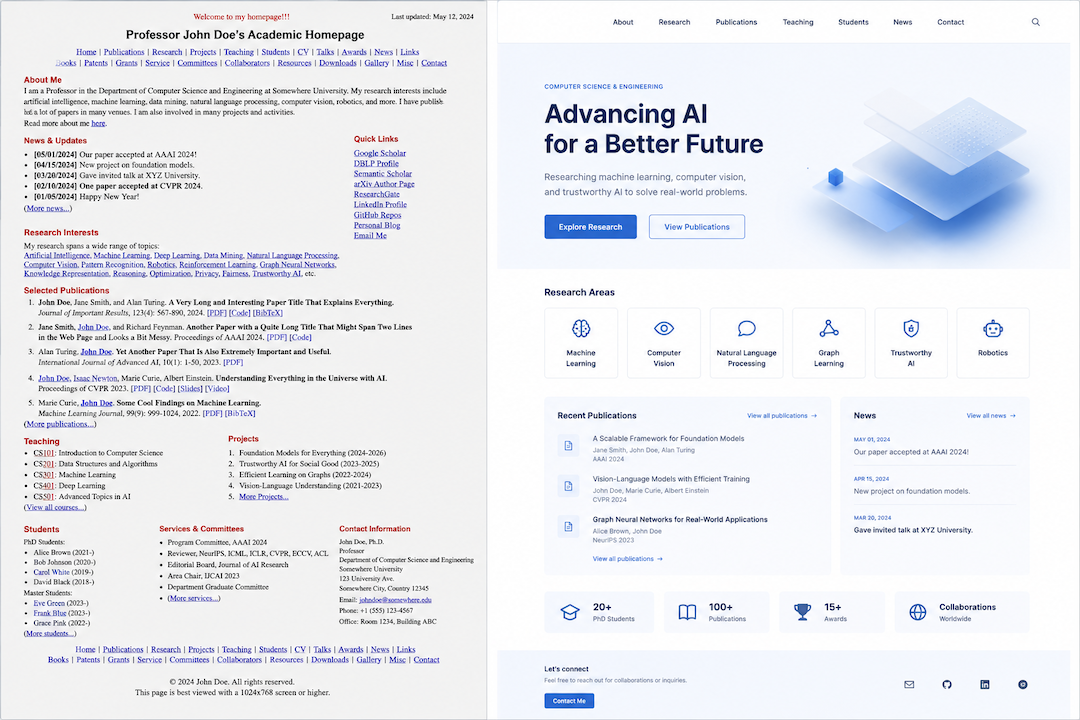
What Visitors Actually Expect From a Website
People visiting a lab site want more than a homepage and a list of publications. They want quick answers, and they want proof that the research is active.
Common expectations include:
- Current publications and ongoing projects
- Clear, well-organized research interests
- Team profiles that are kept current
- Simple ways to contact researchers
- Smooth browsing on mobile devices
- Fast-loading pages
- Consistent navigation throughout the site
Meeting these expectations makes life easier for collaborators, students, and funding organizations alike. It also builds confidence before anyone even reads a single paper.
Why Academic Web Presence Requires Ongoing Maintenance
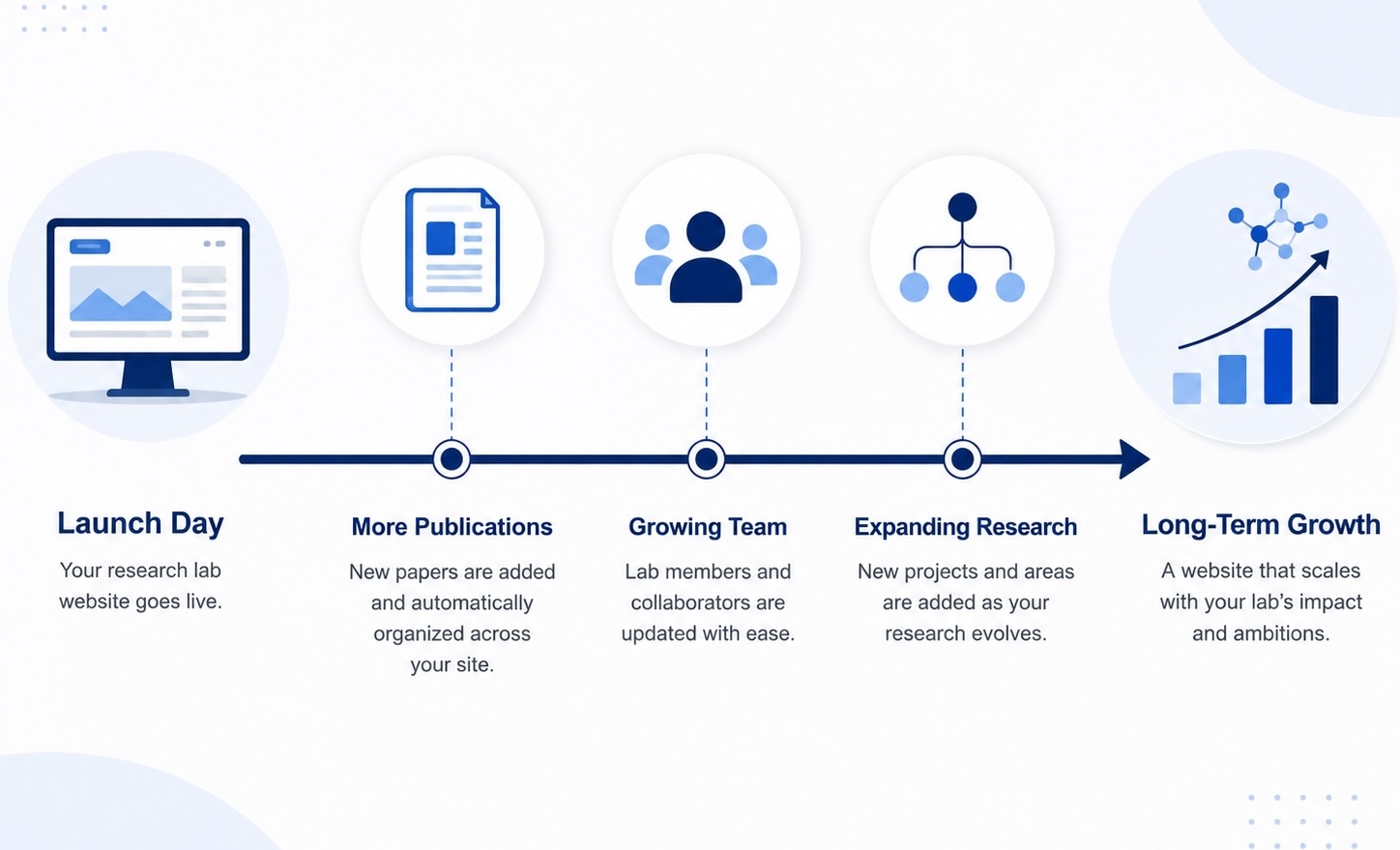
Research changes constantly. New papers get published, grants get awarded, students graduate, and projects shift direction. Because of this, a website is never really finished.
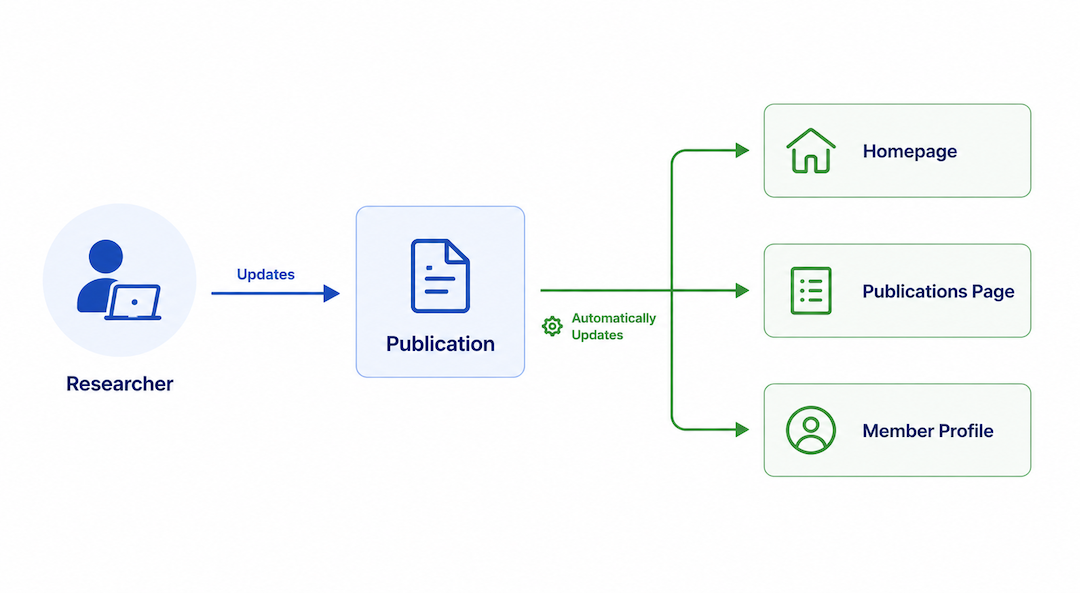
Many lab sites still rely on manually editing individual pages every time something changes. Over time, this leads to duplicated effort, and it raises the risk of information becoming inconsistent from page to page.
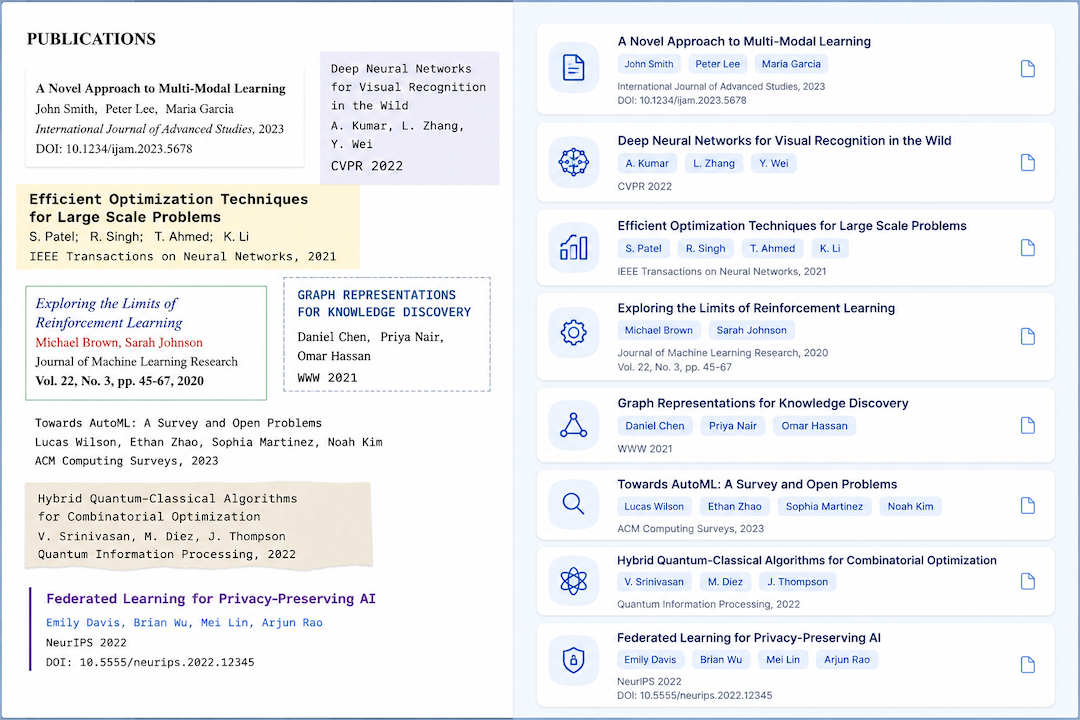
A better approach is to treat content as structured data. Rather than editing several pages separately, publications, people, and projects can be stored centrally and pulled into place wherever they are needed. This cuts down on maintenance, and it helps the site stay accurate without constant upkeep.
Accessibility Is Now Part of the Standard
For many universities, especially those involved in federally funded research, digital accessibility has moved from a nice-to-have feature to a core expectation.
Accessible design benefits everyone, not just those who rely on assistive technology. Keyboard navigation, readable content structures, descriptive alternative text, and compatibility with screen readers all make a site easier to use. Additionally, accessible websites help institutions meet evolving requirements while showing a genuine commitment to inclusive communication.
Building an Academic Web Presence That Reflects Active Research
The strongest academic web presence is not necessarily the flashiest one. Instead, it is the site that stays current with minimal effort, presents information clearly, and lets visitors understand the research at a glance.
As expectations keep rising, maintaining a strong web presence becomes less about occasional redesigns and more about building a system that grows alongside the research itself.
Ready for a More Sustainable Lab Website?
If you are looking for a way to keep your research website current without constant manual updates, Research Lab Network by Pendari offers an academic-focused platform built around structured content for publications, people, and research portfolios. It helps labs maintain a modern, accessible academic web presence for the long term.