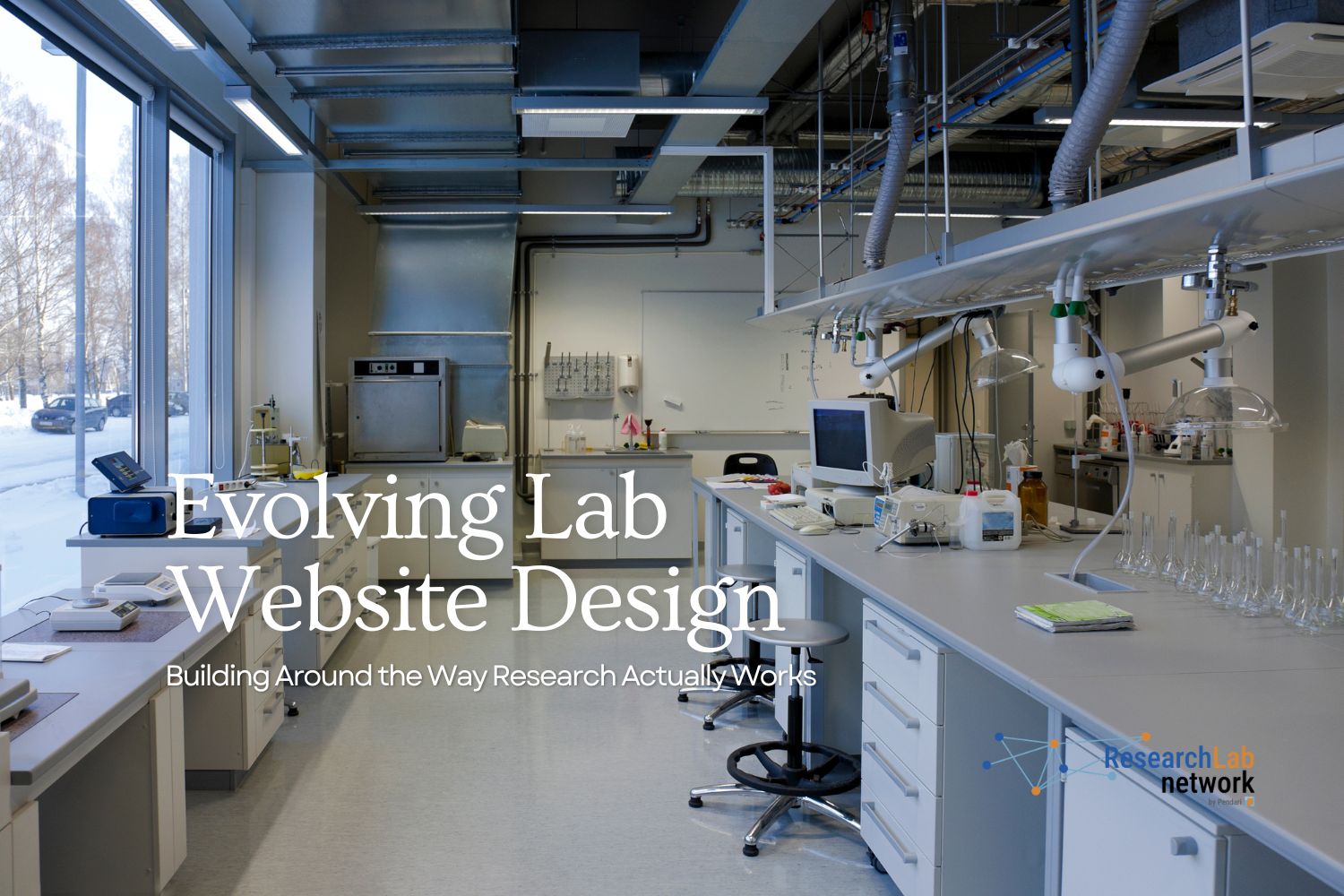
Evolving lab website design means going far beyond clean layouts and static pages. Research is inherently dynamic. Projects expand, collaborations shift, outputs accumulate, and priorities change. Yet most lab websites are still built like fixed brochures, forcing researchers into constant manual updates and leaving visitors with an outdated picture of the lab’s work. The solution is to align your website’s structure with the actual lifecycle of academic research.
Why Traditional Lab Websites Resist Evolving
A typical lab site starts organized but quickly fragments. Publications end up on one page, people on another, and projects somewhere else entirely. As the lab grows, keeping everything coherent becomes increasingly labor-intensive.
The root problem is structural. Most platforms treat content as isolated pages rather than interconnected data. When a new publication is added, it rarely updates project pages, faculty profiles, or research themes automatically. Over time, this produces redundant manual updates, inconsistent information, and a site that no longer accurately reflects the lab’s work.
The Right Foundation for Evolving Lab Website Design
A more resilient model treats content as modular and relational rather than fixed. Publications connect automatically to projects, people, and research areas. Faculty profiles reflect current outputs without manual editing. Research themes update as new work is added.
This is only possible when content is built on structured data models rather than standalone pages. Each new input, whether a publication, dataset, or team member, propagates across the site automatically. The result is a website that stays accurate and coherent over time without requiring constant intervention or periodic redesigns.
Accessibility and Compliance in an Evolving Lab Website Design
As research evolves, so do compliance expectations. Accessibility is no longer optional, particularly for federally funded work. A structured system ensures that updates consistently meet accessibility standards rather than relying on fixes after the fact. This matters especially when adding media, updating team pages, or expanding research portfolios at scale.
Conclusion
Most lab websites fail because they are designed for a single moment in time. Research, however, is never static. When the infrastructure is right, labs can focus on contributing new knowledge rather than managing outdated content. A truly evolving lab website design transforms your site from a recurring maintenance burden into a living, accurate representation of your work.
Ready to Rethink Your Lab’s Website?
If your current site requires constant updates just to stay relevant, it is time to reconsider the structure. Research Lab Network by Pendari is built specifically for academic workflows, so your website evolves as your research does, without the manual overhead.