An academic lab website has to handle content that never sits still: people join and leave, publications pile up,

An academic web presence used to mean little more than an online directory listing. Today, it means much more. Faculty,

For federally funded projects, research website accessibility is quickly becoming a core part of responsible digital communication. A research website is more than a place to showcase publications and projects.

Your lab collaboration website is often the first impression a potential research partner will ever have of your work. Before anyone sends an email or schedules a meeting,
A good research lab website is not just about looking nice when it first goes live. It needs to stay up to date,

Managing a research lab website gets harder as your lab grows. Publications change, team members come and go,
A research lab website should do more than make a strong first impression. It needs to support your team’s ongoing communication as publications grow,
In academia, people encounter your work long before they meet you in person. A research lab website is often the very first touchpoint for prospective students,

When it comes to research lab web design, the difference between bad and good rarely comes down to aesthetics alone.

A lab website redesign that takes 60 seconds sounds like clickbait. In reality, it exposes a genuine problem most academic labs share.
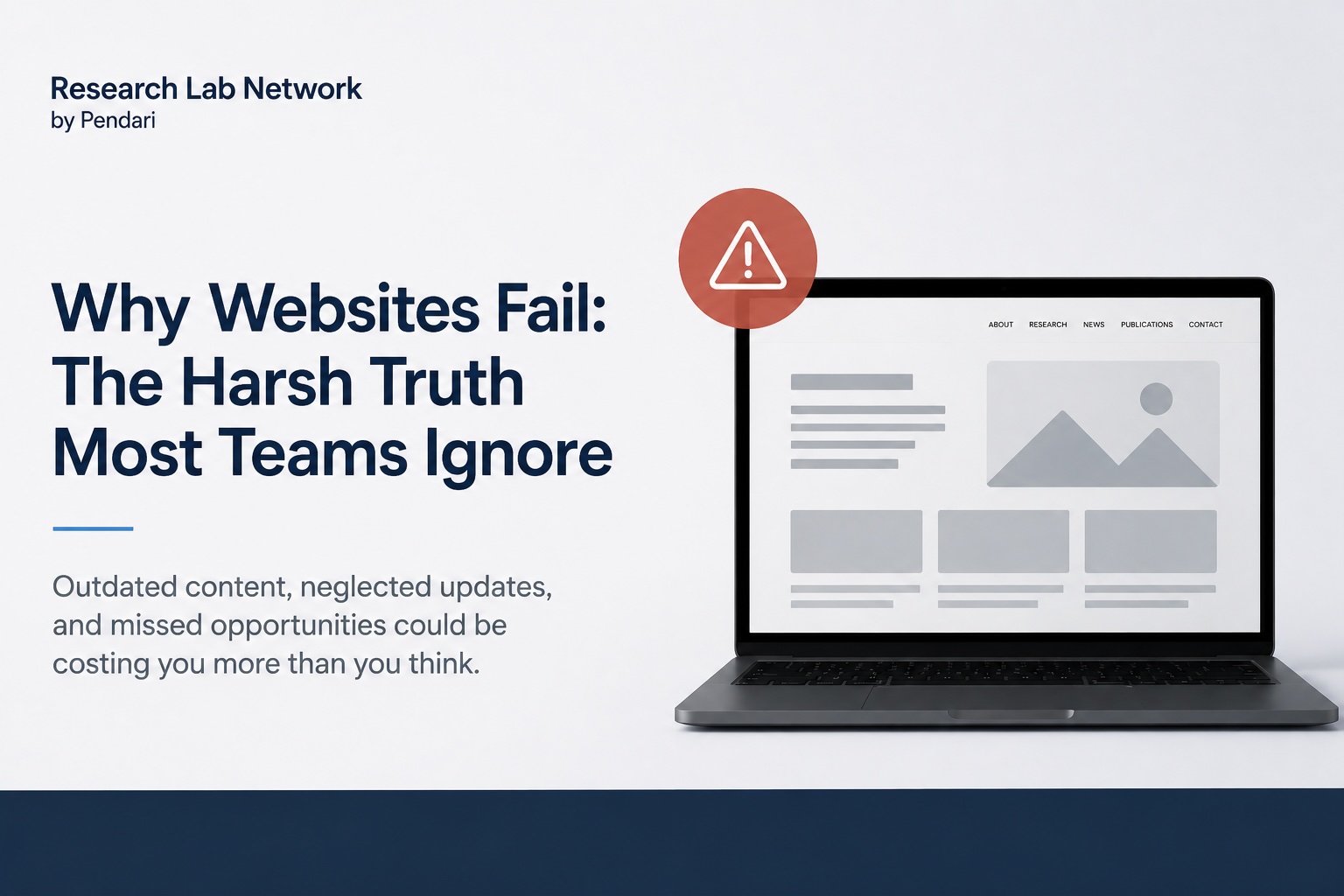
Understanding why websites fail starts with one uncomfortable reality: it rarely comes down to design or budget. The real problem is structural.