A research lab website should do more than make a strong first impression. It needs to support your team’s ongoing communication as publications grow, personnel changes, and research evolve. Yet for most academic labs, websites become harder to maintain over time rather than easier, and the gap between what the site shows and what the lab is actually doing keeps widening.
Why A Research Lab Website Falls Behind
Most academic websites are built on generic content management systems that require manual edits for every update. That approach works reasonably well at launch, but it does not scale.
As the lab grows, the cracks start to show. Publication pages fall behind because each entry requires a separate edit. Faculty and student profiles become inconsistent as team members come and go. Outdated content lingers because no one has the time to track it all down. Research projects get duplicated across multiple pages, and accessibility improvements pile up on the to-do list indefinitely.
For busy research teams, the website gradually shifts from being a communication asset to an administrative burden. And because most generic platforms are designed for broad commercial use rather than academic environments, they offer no real solution to these problems. They were simply not built to handle citation-heavy content, evolving personnel structures, or the kind of ongoing publication activity that defines a productive research group.
A Research Lab Website Built Around How Labs Actually Work
Research Lab Network by Pendari was designed specifically for this environment. Rather than treating a research lab website as a collection of disconnected static pages, the platform organizes content through structured academic modules that reflect how research groups actually operate.
Publications, people, and research portfolios are managed dynamically through integrated plugins. A single publication update automatically reflects across faculty profiles, research categories, and project pages without any repetitive manual editing. The same logic applies to lab member directories, research area listings, and other content that would otherwise require updates in multiple places at once.
The result is a website that stays organized and accurate as the lab evolves, rather than one that requires a full rebuild every few years just to keep up.
The Four Areas Where Academic Websites Struggle Most Over Time
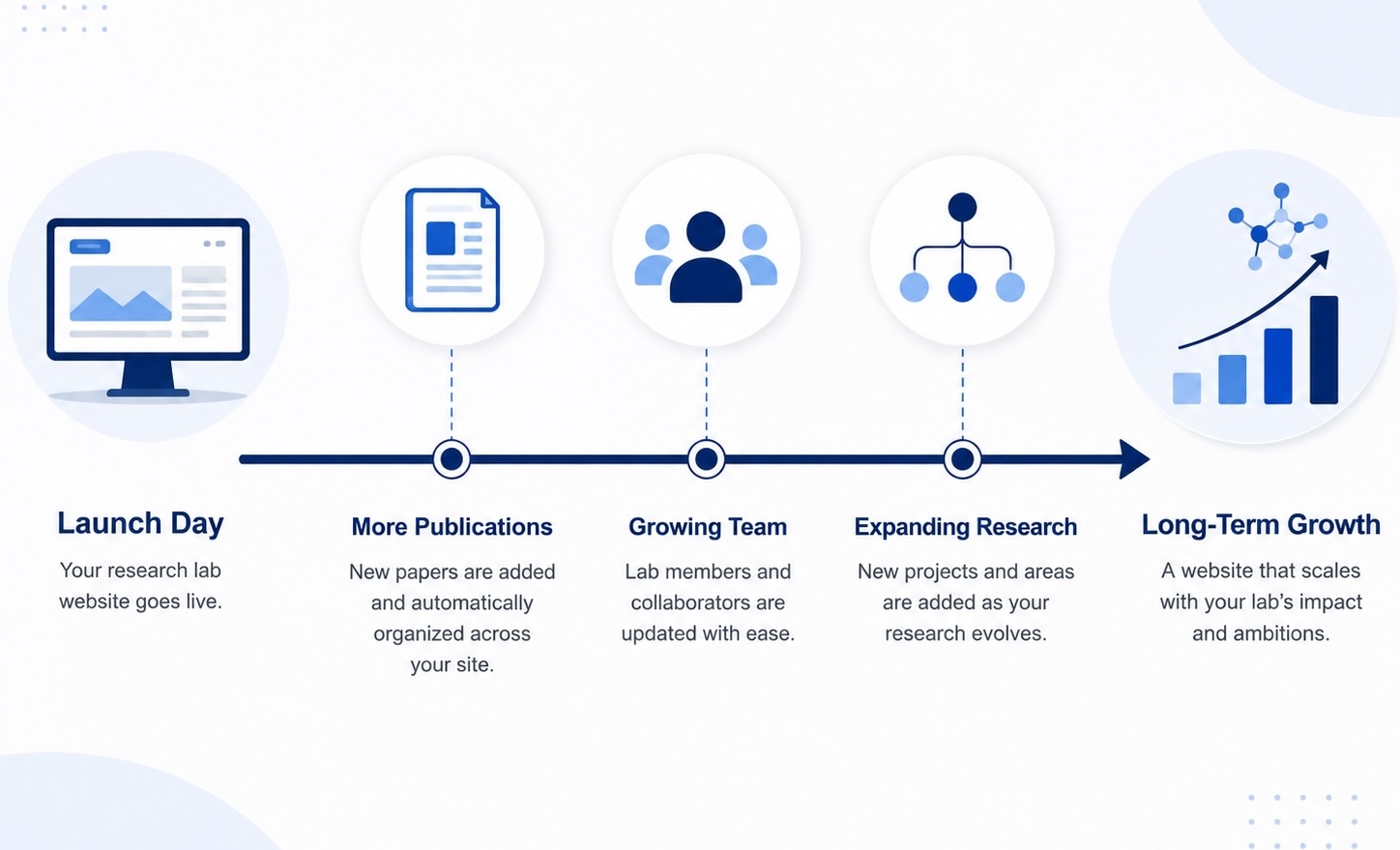
A website launch marks the beginning of a lab’s digital presence, not the end. In practice, four areas tend to create the most maintenance challenges as the years go on.
Publication growth. Research output is continuous. Without a structured system, publication records quickly become incomplete or inconsistent. A dedicated publication management system helps labs maintain discoverable, well-organized records without rebuilding pages from scratch each cycle.
Team turnover. Graduate students, postdocs, and collaborators change frequently. Every departure or arrival means profile updates, and without a structured people directory, outdated information tends to stay visible far longer than it should. A well-designed system makes those transitions routine rather than disruptive.
Research expansion. Labs grow into new initiatives, grants, and interdisciplinary collaborations over time. A flexible research portfolio system allows the website to grow alongside that expansion without becoming cluttered or disorganized. New projects and focus areas can be added without breaking the structure of existing content.
Accessibility compliance. Accessibility standards are rising across higher education, particularly for federally funded research institutions. Sustainable websites need accessible navigation, readable content structures, and systems built to adapt as compliance expectations continue to evolve. Retrofitting accessibility onto a poorly structured site later is far more costly than building it in from the start.
What to Look for in a Long-Term Academic Website Platform
Not every website platform is worth building on for the long term. When evaluating options for a research lab website, there are a few capabilities worth prioritizing.
Structured content management matters more than visual flexibility. A platform that handles publications, people, and research areas as distinct content types will serve a lab far better than one that treats everything as a generic page. Dynamic relationships between content types, where a publication automatically connects to its authors and research areas, reduce maintenance significantly over time.
Scalability is equally important. The platform should support a lab of three just as well as a lab of thirty, and it should accommodate growth in publications, personnel, and research scope without requiring a structural overhaul.
Finally, accessibility should be built into the platform rather than treated as an afterthought. Labs that receive federal funding in particular need websites that meet evolving standards without requiring constant manual intervention.
Built for Academic Growth, Not Just Launch Day
The real value of a research lab website comes from how well it supports research communication year after year, not just how it looks at launch. Labs need a digital presence that can evolve alongside their publications, researchers, and institutional expectations without requiring constant rebuilding.
Research Lab Network by Pendari helps research groups build exactly that: a scalable, structured, and accessibility-conscious website designed specifically for academic environments and built to grow alongside the work being done in them.
If your lab is evaluating how to modernize its web presence, explore how Research Lab Network by Pendari supports research teams beyond launch day.