5 Tips for Maintaining a Lab Website That Scales With Your Research

5 Tips for Maintaining a Lab Website That Scales With Your Research

Most lab websites start the same way: a graduate student builds something functional, the PI approves it, and everyone moves on. For a while, it works.

Then the lab grows. Publications pile up. Members join and leave. Projects branch in new directions. And the website, built for the lab it was, not the lab it became, starts to crack under the weight of its own growth.

Scaling a lab website is not about rebuilding it every few years. It is about building and maintaining it in a way that grows with your research from the start. Here are five practical tips for doing that.

1. Use Structured Content Instead of Free-Form Pages

The most common reason lab websites become unmanageable is that content was added without structure. Publications get pasted as plain text. Member bios live in a single wall of copy. Project descriptions are buried in PDFs that search engines cannot read.

Structured content means each type of information: publications, team members, projects, news, lives in its own defined format with consistent fields. A publication entry always has a title, authors, journal, year, and DOI. A team member profile always has a name, role, photo, and bio.

This matters for scaling because:

  • New content can be added without redesigning anything
  • Filtering, sorting, and searching become possible
  • Search engines can index your content more effectively
  • Anyone on the team can add content without breaking the layout

If your current website treats every page as a blank canvas, that flexibility will work against you as the site grows. Defined content types are what make a website maintainable at scale.

2. Choose a Template Designed for Research Content

Generic website builders and most university CMS platforms were not designed with lab content in mind. They handle blog posts and contact forms well. But they handle publication archives, PI profiles, and research project hierarchies poorly.

A template built specifically for research labs solves this by providing the right structures: a publications section organized by year, a team page that handles graduate students and postdocs gracefully, and a news feed for updates, grants, and awards.

The practical benefit is compounding. When your template already anticipates the content your lab produces, every new addition takes minutes instead of hours. You are not fighting the system; you are working with it.

This is why purpose-built platforms matter. A lab that starts on infrastructure designed for research content will spend a fraction of the time on maintenance compared to one working around a generic template.

3. Build ADA-Compliant Design In From the Start

Accessibility is not a feature you add later. It is a characteristic of how a site is built, and retrofitting it after the fact is one of the most expensive mistakes a lab can make.

Federally funded institutions are required to meet accessibility standards. The benchmark is WCAG 2.1 AA compliance, some of which covers:

  • Color contrast ratios on all text and visual elements
  • Alt text on every image
  • Keyboard navigability across all menus, forms, and interactive elements
  • Logical heading structure readable by screen readers

Beyond legal compliance, accessible design simply works better. High contrast text is easier to read for everyone. Clean navigation reduces bounce rates.

The cleanest path to compliance is choosing a platform or template that builds these standards, so every page created inherits them automatically. When accessibility is structural, it does not require ongoing manual effort to maintain.

4. Establish a Minimal But Consistent Update Rhythm

The number one reason lab websites go stale is the absence of any maintenance routine. There is no single person responsible, no schedule, and no defined scope, so nothing gets updated until the site becomes embarrassing enough to prompt a rebuild.

You do not need a dedicated webmaster. You need a minimal system.

A sustainable update rhythm for most labs can look something like this:

  • Monthly: Add new publications, update member profiles for anyone who has joined or left
  • Quarterly: Review the research and projects pages for accuracy, update the news feed with any awards, grants, or media coverage
  • Annually: Audit the full site for broken links, outdated content, and any accessibility issues introduced by new content

The key is assigning ownership. One lab member, often a senior graduate student or lab manager, should be responsible for each update category. When responsibility is diffuse, nothing gets done.

Platforms with streamlined content management make this significantly easier. If adding a publication takes two minutes rather than twenty, the update rhythm actually holds.

5. Treat Your Website as a Recruitment and Collaboration Tool

Labs that maintain their websites well tend to share one mindset: they think of the website as an active communication tool, not a static archive.

This reframe matters because it changes what you prioritize. A static archive needs to be accurate. An active communication tool needs to be accurate, current, and compelling — especially to the two audiences that matter most for lab growth: prospective researchers and potential collaborators.

For prospective students and postdocs, your website is often the deciding factor between emailing you and moving on. A publications page last updated two years ago signals a lab in decline, regardless of what the actual research looks like. A clear, current open positions page with a straightforward application process removes friction at exactly the moment a strong candidate is making a decision.

For collaborators, a well-organized research page that clearly articulates your lab's current focus areas makes it easy for other researchers to identify alignment and reach out. That visibility compounds over time.

The labs with the strongest digital presence are not necessarily the ones with the most resources. They are the ones who decided their website was worth maintaining.

Putting It Together

These five principles reinforce each other. Structured content makes templates work better. Accessible templates reduce compliance risk. A consistent update rhythm keeps structured content current. And treating your website as a communication tool gives your team the motivation to maintain it.

The labs that get this right are not the ones that invested the most in web development. They are the ones who started with the right infrastructure and built sustainable habits around it.

If your current website was not built with any of these principles in mind, the good news is that switching to purpose-built infrastructure, like Research Lab Network, is often faster and less disruptive than a full rebuild. The templates, structure, and compliance foundations are already there. You bring the research.

Research Lab Network provides purpose-built website infrastructure for academic research labs, designed to scale, stay compliant, and keep your lab's work visible.

What do funding agencies look for on a lab website?

What Funding Agencies Expect on a Lab Website

A lab website is often where a reviewer, collaborator, or funding agency representative looks to understand a research group’s work.

While proposals and CVs carry the formal weight of an application, the research lab website plays a supporting role in establishing credibility, transparency, and organization.

Funding agencies and reviewers are not looking for elaborate designs; they are looking for clarity, structure, and evidence of active research.

Clear Presentation of Research Focus

Reviewers want to quickly understand:

  • What the lab studies
  • The problems it addresses
  • Its current research directions

A lab website should present this information clearly and without unnecessary complexity.

If a reviewer cannot identify the lab’s research areas, the site creates friction rather than confidence.

Structured layouts that separate research areas into defined sections make this clarity possible.

Organized and Up-to-Date Publications

Publications are central to evaluating a lab’s impact and trajectory.

Funding agencies expect to see:

  • Recent publications clearly listed
  • Consistent citation formatting
  • Logical organization

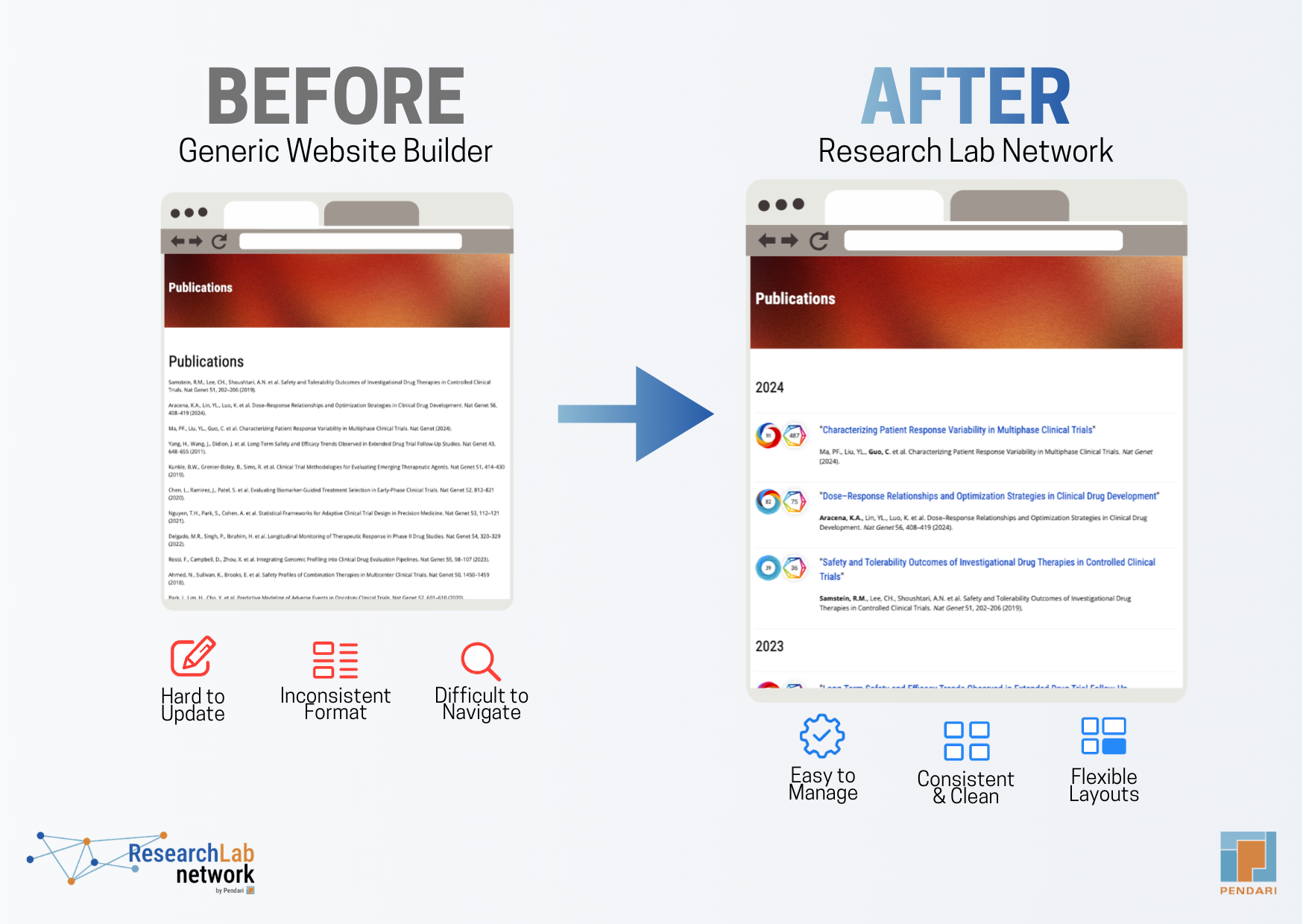
Long, manually formatted lists can be difficult to scan and may signal a lack of maintenance.

Structured systems, such as dedicated publication fields managed through our Pendari plugins, ensure consistency and make it easier for reviewers to assess output.

An organized research lab website reinforces professionalism.

Transparent Lab Membership

Reviewers often assess the composition and strength of a research team.

A lab website should clearly identify:

  • Principal investigators
  • Current members
  • Alumni (when relevant)

Profiles should be current and easy to navigate.

When lab membership is outdated or difficult to interpret, it may raise questions about the lab’s activity level.

Structured templates that centralize member information help maintain accuracy over time.

Evidence of Ongoing Activity

Funding bodies look for signs that a lab is active and engaged.

This may include:

  • Recent publications
  • Active projects
  • News or updates
  • Collaborations

A well-structured academic lab website makes these indicators visible without requiring visitors to scan the site extensively.

When content is managed systematically, updates are more likely to remain consistent.

Professionalism and Accessibility

Reviewers do not expect complex designs. They expect usability.

A research lab website should:

  • Load quickly
  • Be easy to navigate
  • Follow accessibility best practices

Increasingly, accessibility and WCAG alignment are viewed as part of institutional responsibility. An inaccessible site can undermine otherwise strong research credentials.

Our templates at Research Lab Network are designed with accessibility in mind to reduce this risk.

Why Structure Matters

The common thread across these expectations is structure.

Funding agencies and reviewers are evaluating clarity, organization, and evidence of impact. A lab website that relies on manual formatting can quickly become inconsistent.

Purpose-built academic website templates combined with structured content systems, such as Pendari plugins for publications, people, and research, help maintain organization as the lab grows.

Content is entered once, displayed consistently, and updated efficiently.

This allows the website to reflect the lab’s work accurately over time.

Conclusion

A lab website is not simply a digital brochure; it is part of how funding agencies and reviewers evaluate credibility and research activity.

Clear research descriptions, organized publications, transparent team information, and accessible design all contribute to a professional presentation.

Labs that approach their website strategically, using structured templates and content systems, are better positioned to present their work with clarity and confidence.

Why Accessibility Is Non-Negotiable for Academic Websites

Why Accessibility Is Non-Negotiable for Academic Websites

Academic website accessibility is no longer a secondary consideration. Across universities, accessibility expectations are tightening due to regulatory requirements, institutional policies, and increased scrutiny tied to public funding.

For research labs, this shift has practical implications. A research lab website is not independent from its university; it is part of the institution’s digital footprint. That means accessibility standards apply just as strongly to lab websites as they do to central university pages.

Understanding why accessibility is becoming non-negotiable helps labs prepare proactively rather than reactively.

Regulatory Pressure Is Increasing

In the United States, digital accessibility obligations for universities are grounded in the Americans with Disabilities Act (ADA) and Section 504 of the Rehabilitation Act. Public universities, as recipients of federal funding and public entities, are required to ensure that their digital content is accessible. While Section 508 formally applies to federal agencies, many universities align with its technical standards, which reference WCAG guidelines.

While enforcement has varied, legal complaints related to inaccessible university websites have increased. Institutions are responding by strengthening internal compliance requirements.

As a result, university website accessibility standards now frequently extend to department and lab websites.

Accessibility is no longer just best practice; it is risk management.

Funding Expectations Are Evolving

Research labs get grants from federal agencies, foundations, and institutional programs. These funding bodies increasingly emphasize inclusion, equity, and public access.

An inaccessible research lab website can conflict with these expectations.

When research is publicly funded, there is an implicit expectation that the resulting information is publicly accessible. This includes individuals using screen readers, keyboard navigation, or other assistive technologies.

Website accessibility compliance supports broader institutional commitments to equity and inclusion.

Universities Are Formalizing Accessibility Policies

Many universities now conduct periodic accessibility scans of affiliated websites. Labs may receive notices requiring remediation if their site fails automated or manual checks.

Some common issues are:

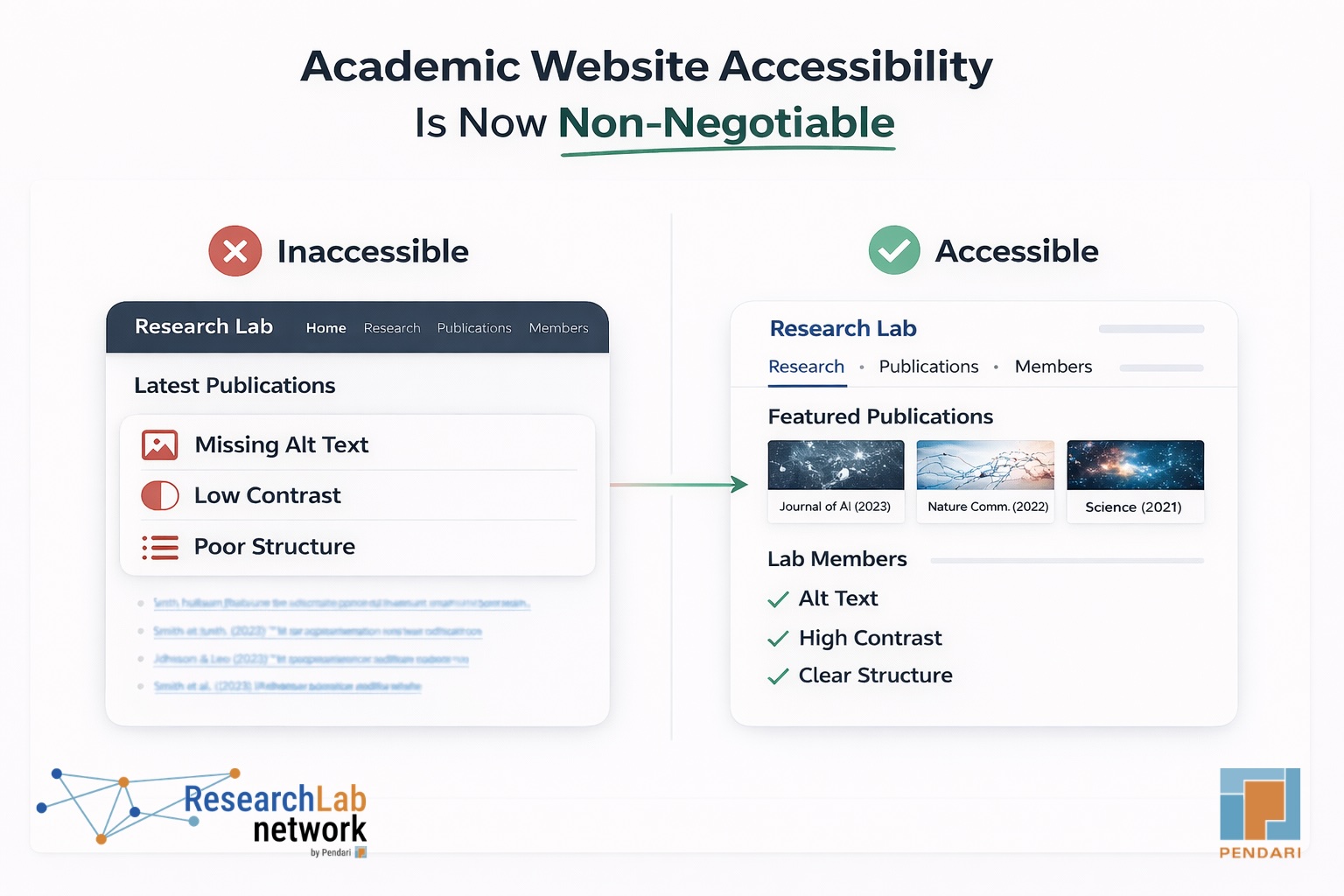
  • Missing alt text for images
  • Improper heading structure
  • Low color contrast

Because lab websites are often built independently, they may not automatically meet university web accessibility standards.

Remediation can be complex and costly if accessibility was not considered from the start.

Accessibility Impacts More Than Compliance

Beyond regulatory and institutional concerns, accessibility affects usability more broadly.

Clear heading structure improves readability.
Proper contrast improves visibility.
Logical navigation improves user experience.

Accessibility best practices often lead to a better overall design and clearer communication.

For research labs, this impacts recruitment, collaboration, and public engagement.

Building With Accessibility in Mind

For new lab websites, incorporating accessibility from the beginning is far more efficient than retrofitting later.

An ADA-compliant academic website considers:

  • WCAG guidelines during design
  • Accessible navigation structures
  • Compatibility with assistive technologies

This approach reduces long-term maintenance costs and aligns with institutional standards.

Conclusion

Academic website accessibility is becoming non-negotiable due to regulatory frameworks, funding expectations, and formal university policies. Research labs are increasingly expected to meet the same digital standards as their institutions.

Understanding these pressures allows labs to approach accessibility strategically rather than reactively, ensuring that a research lab website meets accessibility standards supports compliance, inclusion, and long-term sustainability.

Publications page in a generic builder vs. Research Lab Network

Why Generic Website Builders Fall Short for Research Labs

Research Lab Website: Why Generic Builders Fall Short Many research labs use generic website builders because they are easy to access and quick to launch. However, these platforms were not designed for academic content. As publications accumulate, projects evolve, and lab membership changes, maintaining a clear and organized research lab website becomes increasingly difficult. We […]

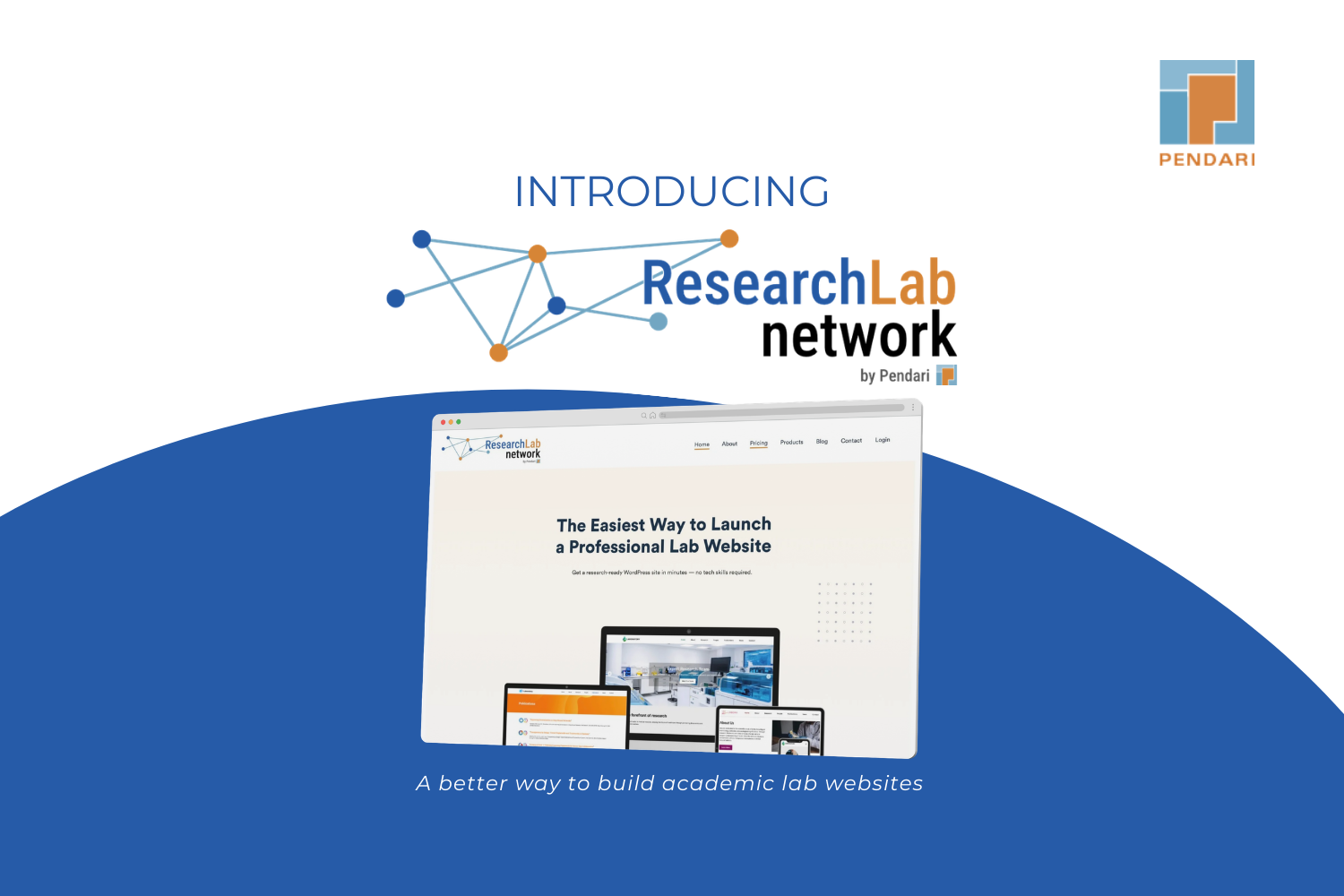
Introducing Research Lab Network

Introducing Research Lab Network: A Platform Built for Academic Lab Websites

An academic lab website is often the primary place where its work is presented to the world. It showcases lab members, research projects, and publications, and helps establish credibility with collaborators, funding agencies, and prospective students.

Yet most lab websites are built using generic tools that were never designed for research environments. As a result, many labs struggle with disorganized publication lists, outdated member pages, and an academic lab website that is difficult to maintain.

Research Lab Network was created to provide a better foundation.

Designed Around the Structure of Research Labs and Built to Support Long-Term Growth

Research labs manage information differently from most organizations. Publications accumulate over time, students graduate, and research directions evolve.

Research Lab Network provides built-in systems to manage:

  • Lab members and alumni

  • Publications

  • Research areas and projects

It was designed to accommodate these changes without requiring frequent redesigns. This structure keeps information organized and makes updates straightforward, without relying on manual formatting, as the lab grows.

This allows labs to maintain a professional online presence without ongoing technical overhead.

Launch Quickly Using Purpose-Built Templates

Starting a website from scratch can be slow and technically demanding. Research Lab Network offers professionally designed templates created specifically for academic use.

Labs can select a design, add their content, and launch a fully functional website in a fraction of the time. Each template is designed to present research clearly and consistently, while remaining easy to maintain.

Accessibility and Institutional Expectations

Universities increasingly expect lab websites to meet accessibility standards. Research Lab Network templates are developed with accessibility best practices in mind, helping labs align with institutional requirements and avoid costly remediation later.

A Better Foundation for Presenting Research

A well-designed lab website supports recruitment, collaboration, and visibility. More importantly, it allows labs to present their work clearly and accurately.

Research Lab Network provides a platform designed specifically for that purpose. Combining academic-focused templates with structured content management, it gives research labs a reliable and sustainable way to build and maintain their websites.

Ready to launch a better lab website? Explore Research Lab Network by Pendari and see how quickly your lab can get online.

How Structured Content Improves Research Lab Website Maintenance and Scalability

How Structured Content Improves Research Lab Website Maintenance and Scalability

A research lab website needs to evolve alongside the lab itself. New publications, new team members, and new projects all need to be reflected quickly and accurately. But many labs find that keeping their website up to date becomes harder over time.

This isn’t a research problem. It’s a website structure problem.

Structured content provides a better foundation for managing a research lab website, making updates easier and ensuring the site remains accurate and scalable.

Why Research Lab Websites Become Difficult to Maintain

Many research lab websites are built using traditional pages where information is added and edited manually. Publications, research projects, team members, and news are often copied into different sections of the site.

This creates unnecessary maintenance work.

For example, adding a new publication may require updating:

  • The main publications page

  • The researcher’s profile

  • The homepage or featured section

As research output increases, this approach becomes inefficient and harder to manage. Over time, outdated information accumulates, which can affect the lab’s credibility and visibility.

A research lab website should support ongoing updates, not slow them down.

What Structured Content Means for a Research Lab Website

Structured content organizes information into dedicated entries instead of embedding it directly into pages.

Publications, research projects, lab members, and news are managed as individual records. Each record contains defined fields, such as title, authors, and date.

This allows the research lab website to automatically display content wherever it belongs.

For example, when a publication is added, it can immediately appear on:

  • The publications page

  • The author’s profile

  • Related research sections

This improves accuracy and eliminates duplicate work.

Benefits of Structured Content for Research Lab Websites

Using structured content improves both short-term maintenance and long-term scalability.

Key benefits include:

  • Faster updates to publications and team profiles

  • Consistent formatting across the website

  • Reduced manual editing

  • Easier website management for lab staff

  • A scalable system that supports future growth

This allows labs to keep their website aligned with their research activity without increasing administrative effort.

Why Structure Is Critical for Long-Term Research Lab Website Management

A research lab website is more than a static page. It is an ongoing record of the lab’s work, people, and output.

Without a scalable structure, maintenance becomes more difficult as the lab grows.

Structured content ensures that the website remains:

  • Accurate

  • Organized

  • Easy to update

  • Sustainable over time

This enables the website to continue supporting the lab’s research, reputation, and collaborations.

Conclusion

Maintaining a research lab website should be straightforward, even as the lab expands.

Structured content improves how information is managed, making the website easier to maintain and better suited for long-term growth.

For labs that want their research lab website to remain current, professional, and scalable, structured content provides the right foundation.

Why Academic Lab Websites Are Not Like Other Websites

Academic Lab Websites are Different From Other Websites

Academic lab websites are often built with the same tools and assumptions as small businesses or personal websites. At first glance, this seems reasonable: a homepage, a few pages, and a clean design. In practice, this approach usually withers in academic environments. After working with professors and principal investigators across many universities throughout the United […]

research scientist using microscope in chemistry laboratory

What Makes an Excellent Research Lab Website?

Your lab’s website is more than just an online presence—it’s often the first impression people have of your work. A well-designed, informative, and visually cohesive site can help you attract new researchers, secure funding, foster collaborations, and share your discoveries with the world. So, what exactly makes a research lab website stand out? Here are the key elements that set a great one apart.

A Clear and Compelling Identity

Your website should clearly communicate who you are and what your lab stands for. Include your lab’s name, mission, and research focus in a way that resonates with both scientific and general audiences. A concise, well-crafted introduction can go a long way in establishing credibility and purpose from the moment someone visits your page.

Easy Access to Key Information

Visitors should be able to find essential information quickly—contact details, current team members, and active projects should be easy to locate and up to date. Maintaining a “News” or “Updates” section to highlight recent publications, awards, or lab events helps keep your site dynamic and relevant.

A Well-Curated Research Overview

Your research is the heart of your lab, and your website should reflect that. Summarize ongoing and completed projects clearly and concisely. Explain your methods and highlight the significance and impact of your findings. Aim to make this content understandable not only for fellow researchers but also for potential collaborators, funders, and curious members of the public.

Smooth, Intuitive Navigation

Good design supports good science communication. Visitors shouldn’t struggle to find what they’re looking for. An intuitive menu, well-labeled sections, and a functional search feature help users move through your content effortlessly. Clean navigation ensures that your work—not confusing design—takes center stage.

Highlighting Publications and Achievements

Dedicate a section to showcase your lab’s scholarly output. Include links to published papers whenever possible, and feature key grants, awards, and recognitions. This section not only celebrates your achievements but also builds your lab’s reputation within the academic community.

Engaging Visuals

Visual storytelling makes complex science more approachable. Incorporate high-quality images, graphics, and videos that complement your research summaries. Lab photos, data visualizations, and short interviews can bring your work—and your team—to life, helping visitors connect with your story.

Opportunities for Collaboration and Involvement

A great website invites interaction. Provide clear pathways for potential collaborators, students, or visitors to get involved. Job openings, collaboration opportunities, or even a newsletter signup can encourage ongoing engagement and build your lab’s network.

Extending Reach Through Social Media

Active social media channels can amplify your lab’s visibility and foster new connections. If you’re able to post consistently, consider linking your website to your lab’s social media profiles. This keeps your audience updated and provides additional touchpoints for engagement.

Accessibility and Compliance

Finally, ensure your website meets accessibility and privacy standards. Designing an inclusive site—one that works well for people of all abilities—shows professionalism, responsibility, and respect for your diverse audience.

Conclusion

An exceptional research lab website communicates identity, makes information easy to find, celebrates achievements, and engages both experts and the public. With thoughtful design and well-organized content, your lab’s site can become a powerful platform to share discoveries, attract new opportunities, and expand your scientific impact.

Vintage wooden cabinet with multicolor labels

Effective Organization of Research Content Online

The Research section of an academic department’s website serves as a window into the institution’s intellectual life — showcasing the discoveries, innovations, and questions that drive its mission. It tells the world what your department is working on and why it matters. Whether you’re launching a new site or refreshing an existing one, structuring your research content thoughtfully ensures it’s both engaging and easy to navigate.

How to Present Research Projects

Your research content should reflect the depth and diversity of the work being done while remaining accessible to a broad audience. Consider different approaches depending on the stage and complexity of each project:

  • Short Write-Ups
    For early-stage or straightforward projects, keep descriptions concise — just a few sentences that explain the goal and potential impact. Add one or two relevant images to make the content more visually appealing.
  • Detailed Write-Ups
    For complex or completed projects, a more comprehensive overview may be appropriate. Include background context, key findings, and implications. Visual elements like diagrams, charts, and data visualizations can help convey depth and clarity.
  • Researcher Credits
    Listing principal investigators, collaborators, or student contributors gives credit where it’s due and helps visitors connect the research to the people behind it.
  • Publications
    Link related papers, abstracts, or preprints so visitors can explore the scholarly output in more depth.
  • Supplementary Resources
    Include links to full-text PDFs, datasets, videos, or other supporting materials for readers who want to dive deeper into the details.

Preparing Content for Web Developers

Your web development team will handle the design and technical structure, but they rely on you to supply clear, organized content. Provide well-structured summaries of each project, explain how your research areas are categorized, and define any specialized terminology. This ensures that your site accurately reflects your department’s work and makes it intuitive for users to explore.

Structuring Your Research Content

Establishing a clear folder system will make content management far more efficient. Create a dedicated “Research” folder and use subfolders or clearly labeled files for each project. Within each, include:

  • Image Files: Use high-resolution images named for easy identification — for example, ProjectName-Experiment.jpg.
  • Text Files: Include all written content (summaries, detailed descriptions, researcher names, etc.). Whenever possible, use Word documents instead of PDFs — they’re much easier for developers to extract and format correctly for the web.
  • Supporting Files: Add PDFs, datasets, or related resources. Make sure filenames correspond to the correct research project for easy reference.

Bringing It All Together

Effectively organizing your research content means finding the right balance between depth and accessibility. Visitors should be able to grasp what your department does at a glance — but also have the option to explore deeper layers of information.

By preparing structured, high-quality materials and collaborating closely with your web team, you can create a research section that does justice to the innovation happening within your department. A well-organized presentation not only enhances your website’s usability but also strengthens your department’s reputation for excellence and engagement.

At Pendari, we’ve been helping academic institutions tell their stories online for more than 20 years. We’ve seen countless approaches to presenting research content — and we’re ready to help you find the one that fits your vision best. Let’s get started.

photo of a mixed age and ethnic group

Organizing the People Section of Your Academic Website

Planning a new website for your department or research institute? One of the most important areas to get right is the People section — the human face of your organization. This section introduces the individuals who drive your research, teaching, and innovation. Thoughtfully organizing and presenting this content helps visitors connect not just with your work, but with the people behind it.

Crafting Effective Researcher Profiles

At the heart of the People section are researcher profiles. Each profile should offer a well-rounded view of the individual — who they are, what they do, and how they contribute to your department. Here’s what to include:

  • Contact Information
    Provide clear details such as email addresses, office numbers, and, when appropriate, professional social media links (e.g., LinkedIn, X/Twitter, Google Scholar).
  • Research Interests
    Summarize each researcher’s areas of focus and current projects to give visitors insight into their academic expertise and passions.
  • Short Biography
    Offer a concise narrative of the researcher’s academic path, notable achievements, and professional background. A strong bio adds personality and credibility to the profile.
  • Awards and Accomplishments
    Highlight key recognitions, grants, or honors that demonstrate expertise and excellence in the field.

Profile Images: Getting Them Right

Images bring authenticity and warmth to a website. A set of high-quality, consistent photos can elevate the entire People section.

  • Quality and Consistency
    Use recent, high-resolution images. Consider scheduling a professional photo session to ensure uniform lighting, background, and composition across all profiles.
  • File Naming and Formatting
    Save each image with a clear, web-friendly filename such as Lastname-Firstname.jpg (avoid spaces and special characters).
    For best display results, crop images to 400×400 pixels and save at 90–95% quality to balance visual clarity and file size.

Clarifying Roles and Terminology

Your web developers are experts in design and technology — but they may not be familiar with your academic structure or specialized terminology. Provide clear context for internal classifications, research groups, or positions. Supplying an organized list with short explanations ensures that the site’s structure and navigation accurately reflect your department’s organization.

Structuring Your People Content

A clear content organization system streamlines the website-building process and makes future updates easier. Create a dedicated “People” folder, with subfolders for each researcher. Within each folder, include:

  • Image Files: Well-named profile images for easy identification.
  • Text Files: Documents containing contact information, bios, research interests, and achievements. One consolidated document works fine as long as formatting is consistent and individual sections are clearly separated.
  • Resources: Optional materials like PDFs of publications, video links, or related media, all labeled clearly.

Final Thoughts

Organizing People content for an academic department website might seem complex, but with thoughtful planning, it becomes straightforward and rewarding. A well-structured, visually cohesive People section doesn’t just introduce your team — it strengthens your department’s identity and reputation.

Ultimately, this section celebrates the scholars, researchers, and staff who make your institution thrive. Present them thoughtfully, and your website will reflect the excellence, diversity, and spirit of your academic community.